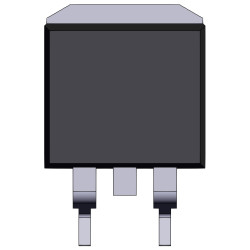
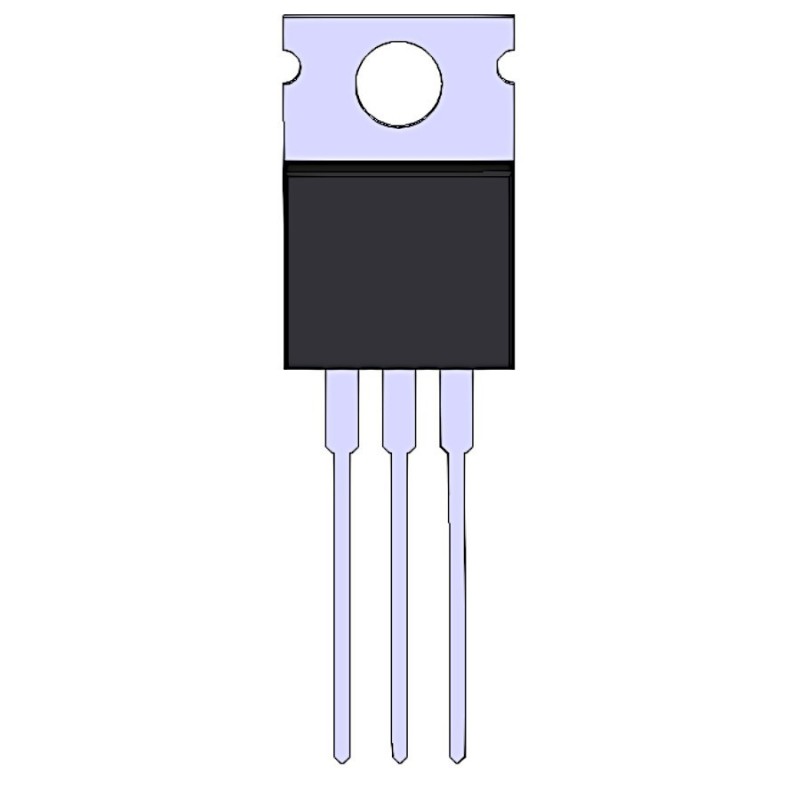
NCE82H140 82H140 TO220 tranzystor MOSFET 140A 82V
  • NCE82H140 82H140 TO220 tranzystor MOSFET 140A 82V
  • NCE82H140 82H140 TO220 tranzystor MOSFET 140A 82V
  • NCE82H140 82H140 TO220 tranzystor MOSFET 140A 82V

NCE82H140 82H140 TO220 tranzystor MOSFET 140A 82V

€2.31
VAT included delivery in Poland 1-2 dni InPost

Volume discounts

Quantity Unit price You Save
20 €2.29 €0.46
40 €2.27 €1.85
60 €2.24 €4.16
100 €2.20 €11.57
Quantity
Available in Polish warehouse

Place an order within 23h 20m 36s And we will send your order today
help_outlineAsk about product
NCE82H140 82H140 TO220 tranzystor MOSFET 140A 82V

NCE82H140 82H140 TO220 tranzystor MOSFET 140A 82V

I accept privacy policy rules  

Tranzystor NCE82H140

  • Symbol: NCE82H140
  • Typ: N-Channel Enhancement Mode Power MOSFET
  • Obudowa: TO220
  • Technologia: Trench MOSFET
  • Waga 2.1g
  • BVDSS (napięcie dren-źródło): 80 V
  • ID (ciągły prąd drenu): 80 A (TC = 25 °C, VGS = 10 V)
  • ID,pulse (impulsowy prąd drenu): 320 A
  • VGS (dopuszczalne napięcie bramka-źródło): ±20 V
  • PTOT (moc strat): 300 W (TC = 25 °C)
  • Zakres temperatur pracy: -55 do +150 °C
Maksymalne wartości graniczne (TC = 25°C)

  • VDS (napięcie dren-źródło): 82 V
  • VGS (napięcie bramka-źródło): ±20 V
  • ID (ciągły prąd drenu): 140 A
  • ID (100°C): 99 A
  • IDM (prąd impulsowy): 480 A
  • PD (moc strat): 220 W
  • EAS (energia lawinowa): 1200 mJ
  • Zakres temperatury pracy i magazynowania: -55 °C do 175 °C

Charakterystyka elektryczna (TC = 25°C)
 
  • BVDSS (napięcie przebicia): 82 V (przy ID = 250 µA)
  • IDSS (prąd upływu): ≤ 1 µA przy VDS = 82 V
  • IGSS (prąd upływu bramki): ≤ ±100 nA przy VGS = ±20 V
  • VGS(th) (napięcie progowe bramki): 2–4 V
  • RDS(on): typ. 4.3 mΩ, max 6 mΩ przy VGS = 10 V i ID = 20 A
  • gFS (transkonduktancja): 65 S

Parametry dynamiczne

  • Pojemność wejściowa (Ciss): 7900 pF
  • Pojemność wyjściowa (Coss): 445 pF
  • Pojemność sprzężenia zwrotnego (Crss): 384 pF
  • Ładunek bramki Qg: 158 nC
  • Qgs: 32 nC, Qgd: 51 nC
Czasy przełączania (VDD=30 V, RL=1 Ω, VGS=10 V, Rg=2.5 Ω)

  • td(on): 23 ns
  • tr: 42 ns
  • td(off): 75 ns
  • tf: 26 ns
Dioda zwrotna

  • VSD: 1.2 V przy IS = 140 A
  • trr (czas odzysku): 50 ns
  • Qrr: 110 nC
Parametry termiczne

  • RθJC (opór termiczny złącze–obudowa): 0.68 °C/W
  • Współczynnik deratingu: 1.47 W/°C
Zamienniki:  AUIRFB4110, AUIRLB4030, BLP028N10‑P, BLP03N08‑P, BLP03N10‑P, BLP05N15‑P, CSD19535KCS, CSD19536KCS, CSP10N4P2, DHS025N88, DHS030N88, DHS035N10, DHS044N12, DSG045N14N, DSG052N14N, CFDP045N10AF102, HGP020N10SGP020N10S, HGP027N10AGP027N10A, HGP039N12SGP039N12S, HGP042N10AGP042N10A, HGP042N10ALGP042N10AL, HGP043N15SGP043N15S, HGP047N12SGP047N12S, HGP050N14SGP050N14S, HY029N10P, HYG035N10NS2P, IRFB4110IRF4110, IRFB4110G, IRFB4110Q, IRLB4030, IRLB4030PBF, IXTP200N085T, JMSH1002ACSH1002A, JMSH1002BCSH1002B, JMSH1002NCSH1002N, JMSH1002YCSH1002Y, JMSH1003NCSH1003N, JMSH1003TCSH1003T, JMSH1004ACSH1004A, JMSH1103TCSH1103T, JMSH1504NCSH1504N, MC10N005, MC11N005, MPGP10R033, NCE82H140, NCE85H21C, NCEP028N85, NCEP031N85M, NCEP033N10, NCEP033N10M, NCEP033N85, NCEP033N85M, NCEP035N10M, NCEP040N12, NCEP12T15, PDP0980, RU1H150R, RUH1H150R‑A, RUH1H220R, RUH85150R, RUH85210R, SE100180GA, SFG150N10PFSFG150N10P, SFG170N10PFSFG170N10P, SFP030N100C3030N100C3, SFP035N95C3, SFP043N100C3043N100C3, SFP045N100C3045N100C3, SFP046N150C3, SM1A50NHF, SWP036R10E8SSW036R10E8S, VBZM80N03, WMK028N10HG2, WMK028N10HGS, WMK036N12HGS, JMTK440P04A, JMTK4006A, JMTK4005A, JMTK4004A, JMTK340P03A, JMTK330N06A, JMTK320N10A, JMTK3006E, JMTK3006D, JMTK3006C, JMTK3006B, JMTK10N10A, JMTK100P03A, JMTK100N03A, JMTK100N02A, JMTK085P04A
Tranzystory nowe, nogi pełnej długości
Pomiar realny
Zdjęcie realne
K1253/NE(ID348927534)
30 Items
5905427019749

High Voltage and Current – This component can operate at high voltages and currents, posing a risk of electric shock. Pay attention to the maximum voltage and current values, as well as appropriate markings indicating these limits.

Caution During Installation – Ensure that the components are correctly mounted in the circuit, as improper connections can lead to overheating, damage, or fire.

Hot Components – Electronic components may heat up during operation, so it is important to follow the recommendations regarding the maximum operating temperature. Appropriate heat sinks or cooling systems should be used to ensure effective heat dissipation. Caution should also be exercised to avoid burns.

Corrosion – Avoid contact with moisture: Fastening components should be protected from prolonged exposure to moisture or aggressive chemicals that can cause corrosion.

Use of protective coatings – Ensure that the components are protected with an anti-corrosion coating suitable for the operating environment (e.g., galvanizing, epoxy coatings). Regular maintenance: Inspect components for signs of corrosion and replace them as needed.

Mechanical damage – Do not exceed the maximum tightening torque: Over-tightening can damage the thread or weaken the fastening components. Use tools with the correct torque rating.

Avoid dynamic loads beyond specifications – Bolts and screws should be used according to their intended purpose, especially in applications exposed to vibrations or impacts.

Pre-use inspection – Before installation, check components for deformation, cracks, or other damage.

Improper use – Ensure you are using fastening components of the correct size, material, and strength class for the given application.

Do not use damaged components – Bolts, screws, and washers with visible mechanical damage or corrosion should be immediately replaced.

Avoid improper assembly – Ensure proper alignment and compression to avoid stresses in the fastening material.

Use of appropriate tools – Use tools that meet specifications for assembly and disassembly (e.g., torque wrenches).

Swallowing Hazard – Small fastening components, such as screws, nuts, or washers, can pose a choking or swallowing hazard, especially for children. They should be stored in a place out of reach of children.

Spreading of Small Components – These components can pose a tripping or loss hazard during work. They should be stored in containers that prevent spillage.

Manufacturer (Private Label) (EU) 2023/988 (GPSR)
Name: Superelektronika sp. z o.o.
Address: ul. gen. K. Sosnkowskiego 26/83
05-300 Mińsk Mazowiecki, Poland
E-mail: sklep@superelektronika.pl
Responsible Person (EU) 2023/988 (GPSR)
Full Name: Radosław Jaromin
Address: Arynów 46A
05-300 Mińsk Mazowiecki, Poland
E-mail: radoslaw.jaromin@gmail.com

You might also like
Comments (0)
No customer reviews for the moment.