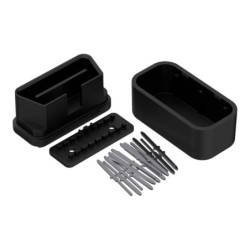
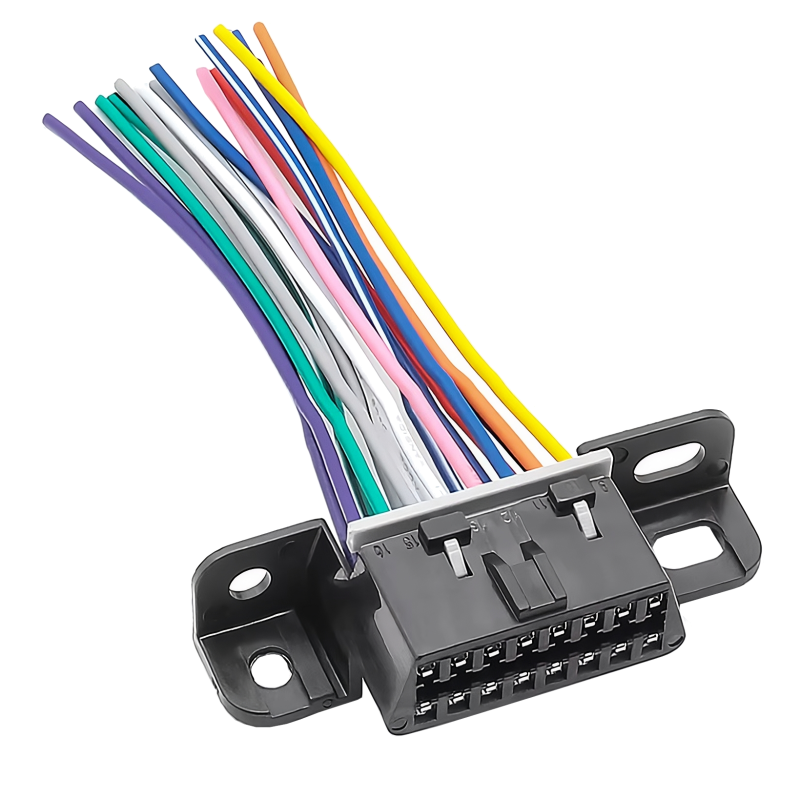


Gniazdo diagnostyczne OBD2 (On-Board Diagnostics) – standardowe złącze stosowane w samochodach do komunikacji z elektroniką pojazdu.
Zastosowanie
Zalety
Pinout
1 → Linia opcjonalna / producenta (OEM-specific)
2 → Magistrala J1850 Bus+
3 → Linia opcjonalna / producenta (OEM-specific)
4 → Masa nadwozia (Chassis Ground)
5 → Masa sygnałowa (Signal Ground)
6 → CAN High (ISO 15765-4 / SAE J2284)
7 → Linia K (ISO 9141-2 / ISO 14230-4 – K-Line)
8 → Linia opcjonalna / producenta (OEM-specific)
9 → Linia opcjonalna / producenta (OEM-specific)
10 → Magistrala J1850 Bus−
11 → Linia opcjonalna / producenta (OEM-specific)
12 → Linia opcjonalna / producenta (OEM-specific)
13 → Linia opcjonalna / producenta (OEM-specific)
14 → CAN Low (ISO 15765-4 / SAE J2284)
15 → Linia L (ISO 9141-2 / ISO 14230-4 – L-Line)
16 → Zasilanie stałe VBAT (+12 V / +24 V, zależne od systemu pojazdu)
Zdjęcie realne
W naszej ofercie dostępne są również wtyki OBD2
Caution During Installation – Ensure that the components are correctly mounted in the circuit, as improper connections can lead to overheating, damage, or fire.
Corrosion – Avoid contact with moisture: Fastening components should be protected from prolonged exposure to moisture or aggressive chemicals that can cause corrosion.
Use of protective coatings – Ensure that the components are protected with an anti-corrosion coating suitable for the operating environment (e.g., galvanizing, epoxy coatings). Regular maintenance: Inspect components for signs of corrosion and replace them as needed.
Mechanical damage – Do not exceed the maximum tightening torque: Over-tightening can damage the thread or weaken the fastening components. Use tools with the correct torque rating.
Avoid dynamic loads beyond specifications – Bolts and screws should be used according to their intended purpose, especially in applications exposed to vibrations or impacts.
Pre-use inspection – Before installation, check components for deformation, cracks, or other damage.
Improper use – Ensure you are using fastening components of the correct size, material, and strength class for the given application.
Do not use damaged components – Bolts, screws, and washers with visible mechanical damage or corrosion should be immediately replaced.
Avoid improper assembly – Ensure proper alignment and compression to avoid stresses in the fastening material.
Use of appropriate tools – Use tools that meet specifications for assembly and disassembly (e.g., torque wrenches).
Swallowing Hazard – Small fastening components, such as screws, nuts, or washers, can pose a choking or swallowing hazard, especially for children. They should be stored in a place out of reach of children.
Spreading of Small Components – These components can pose a tripping or loss hazard during work. They should be stored in containers that prevent spillage.
| Manufacturer (Private Label) (EU) 2023/988 (GPSR) | |
|---|---|
| Name: | Superelektronika sp. z o.o. |
| Address: | ul. gen. K. Sosnkowskiego 26/83 05-300 Mińsk Mazowiecki, Poland |
| E-mail: | sklep@superelektronika.pl |
| Responsible Person (EU) 2023/988 (GPSR) | |
| Full Name: | Radosław Jaromin |
| Address: | Arynów 46A 05-300 Mińsk Mazowiecki, Poland |
| E-mail: | radoslaw.jaromin@gmail.com |


You might also like